What Kids Learn at Each Age: The HoopLife Curriculum Ladder
Basketball has an order, and kids who learn it in order stop having to relearn things. Here is the ladder our written curriculum climbs, from grade 1 to high school.

- Basketball concepts build on each other. Teaching them out of order is why kids plateau.
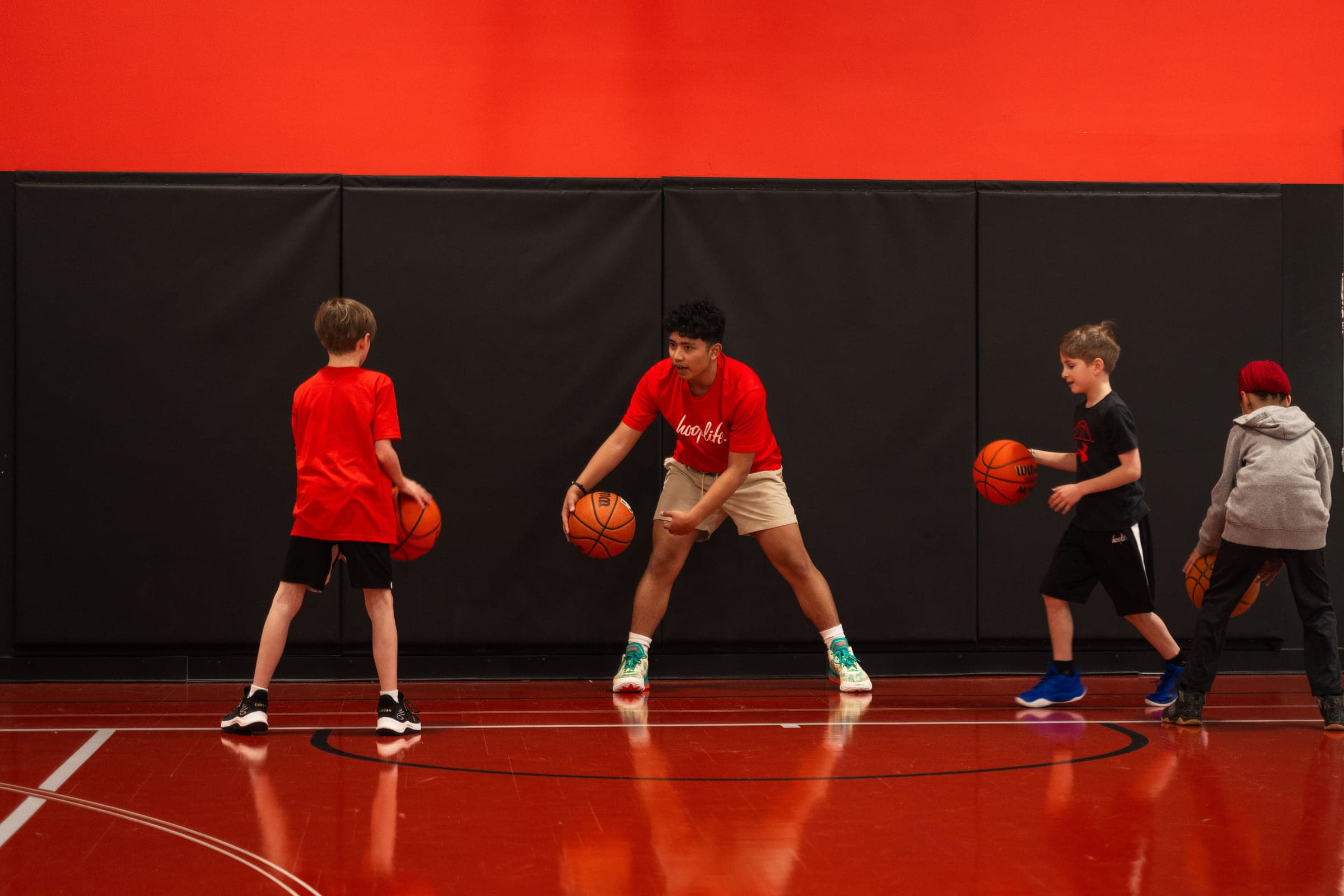
- Grades 1 to 4: pure skill nights, dribbling, passing and finishing, with the game ideas taught in the games, in 3x3 on lowered hoops.
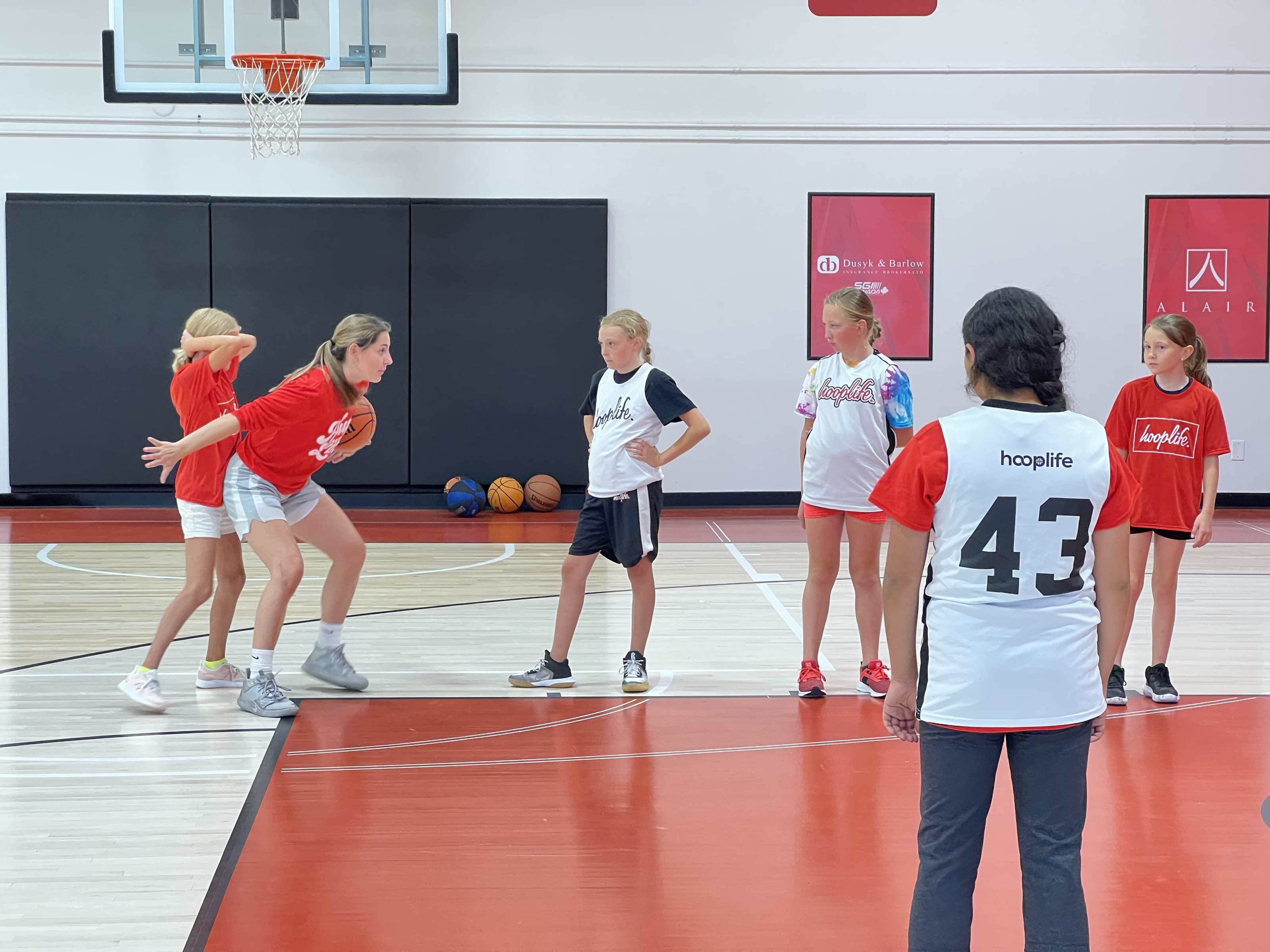
- Grades 5/6: a skill drill every week, then real offences, man to man and inbounds sets.
- Grades 7/8: zone offence, zone defence and press breaks, the high school prep year.
Nobody would teach multiplication before counting, but kids get taught basketball out of order all the time: a grade 3 team running set plays before anyone can cut, a grade 7 kid seeing a zone defence for the first time in a game that counts. The result is players who plateau, not because they lack ability, but because there are holes under their game.
Our written curriculum exists to climb the ladder in order. Here is what each rung looks like, and what a parent should expect to see.
Grades 1 to 4: the skills come first
The first rung is the ball itself: dribbling with the eyes up, passing and catching, stopping on balance, and finishing a layup with either hand. Every night at this age is a skill night. We play 3x3 on hoops lowered to their height, so every kid touches the ball constantly and learns real shooting form on a rim they can actually reach.
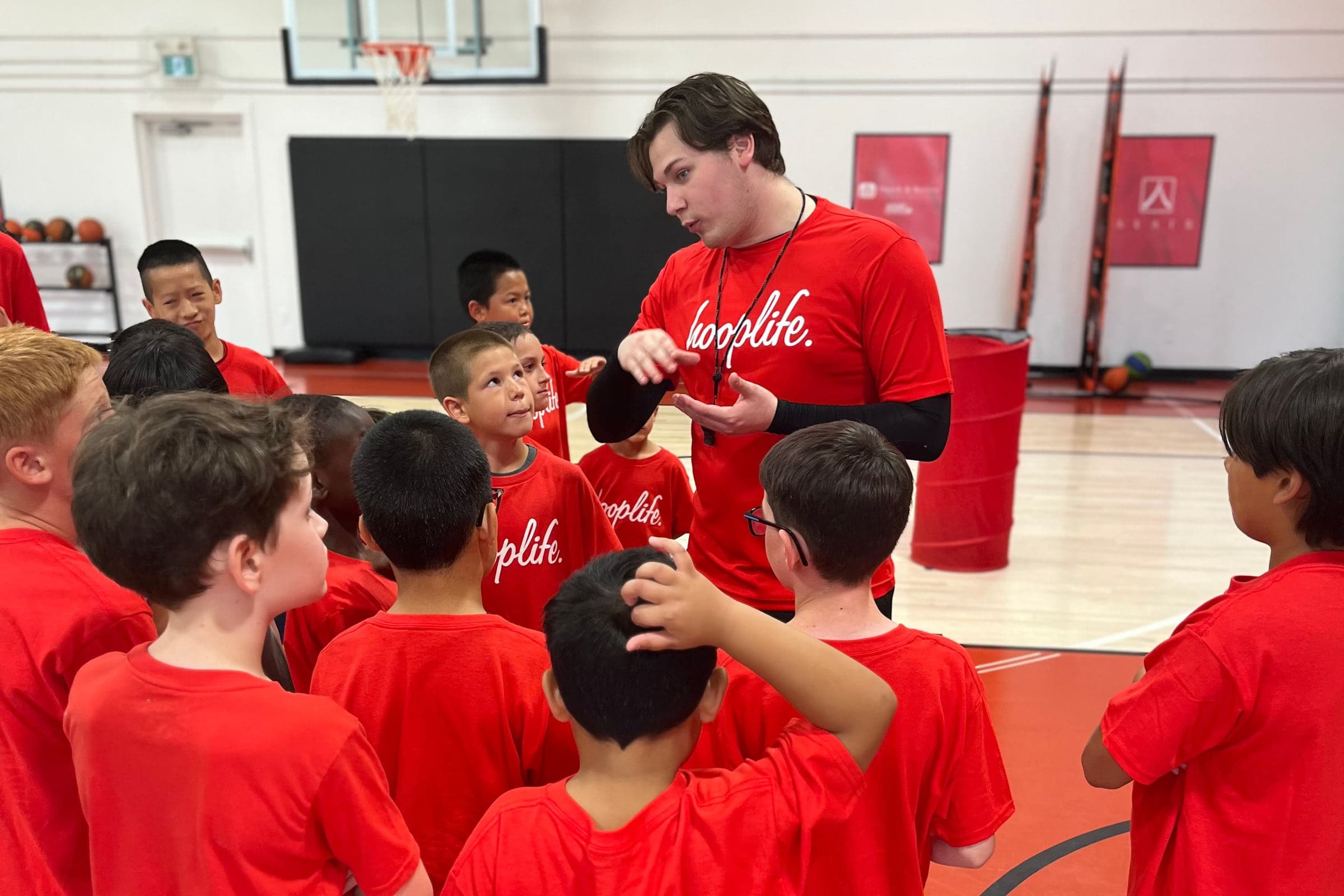
The game ideas, like moving after a pass or finding the open spot, are taught inside the games themselves: the coach stops play for a moment, shows it, and the kids go again. Nobody sits through a lecture at seven.
What you will see by spring: a kid who can dribble without looking down, finish with the hand they used to avoid, and who moves after passing instead of standing and watching.
Grades 5 and 6: running a real offence
Every night still opens with a skill drill at every hoop, because a set play is only as good as the catch, the pass and the finish inside it. Then, with full-court 5v5, comes structure: motion offence, an actual set like Horns, inbounds plays for the baseline and sideline, and pick-and-roll reads. The bench becomes a classroom, because there is finally a game state worth reading.
What you will see: a team that gets organized after a dead ball instead of just throwing it in, and a kid who can tell you what the play was supposed to do.
Grades 7 and 8: the high school prep year
The top of the ladder is everything a school tryout assumes: zone offence and zone defence, beating a full-court press, and executing the younger grades' concepts at game speed under pressure. Kids who arrive at high school having seen all of it walk into tryouts calm.
What you will see: a player who recognizes what the other team is doing and knows the answer, which from the stands looks like calm.
Why the order is the point
Each rung only works because the one below it is solid. Horns is just catching, passing and moving with a purpose, the things grades 1 through 4 built. A press break is just spacing and passing under stress. When the ladder is climbed in order nothing at the top is actually new, and that is what confidence is made of.
All of it is written down: 20 practices per age group, every drill timed and diagrammed, the same curriculum whichever division your kid lands in. The HoopLife League is where the ladder runs season by season, and the weekly sessions keep the skills underneath it growing all year. If you are not sure where your kid fits on the ladder, ask us and we will tell you straight.
The earliest step on this ladder gets its own guide: what basketball for a 3 to 6 year old should actually look like, and why drills are the wrong tool down there.
Frequently asked questions
What should a 7 year old be learning in basketball?
Spacing, cutting, finishing with both hands and loving the game, ideally in a small-sided format on a lowered hoop. Set plays and positions can wait; the habits of moving without the ball cannot.
My kid joined late. Have they missed the ladder?
No. Coaches meet every player where they are, and the concepts get rebuilt quickly at any age. The beginner sessions exist exactly for this, and nobody there is made to feel behind.
When should kids learn to play against a zone?
In our curriculum, zone offence and defence arrive in grades 7 and 8, once motion, spacing and passing are solid. Taught earlier, zone play tends to hide fundamentals rather than build them.
Want the details for your kid?
Leave your info and a real person from HoopLife will send the details and answer your questions. Spots are limited and they do go.