How to Choose a Youth Basketball Program in Regina
House leagues, school teams, clubs, training programs, camps, private coaches and drop-in. What each one is, who it suits, and the questions worth asking any of them.

- Decide what your child needs first: more games, better skills, or harder competition.
- Regina has eight kinds of youth basketball, and each one suits a different kid.
- The number of kids per coach tells you more than any brochure.
- Ask every program the same questions and compare the answers, not the websites.
Regina has more youth basketball than it used to, and the options are genuinely different from one another. This guide describes each kind of program fairly, by what it is rather than who runs it, so you can use it whichever one you end up choosing.
Start with what your child needs
"What is the best program?" has no single answer. A better question is which of three things your child needs right now.
- More playing time. They like the game and want to play more. What they need is games and court time.
- Better skills. Something is holding them back, usually shooting or ball handling. What they need is coaching in a group small enough that somebody notices them.
- Harder competition. They are already good and are coasting. What they need is stronger teammates and opponents.
Each need points at a different kind of program, and most kids move between them as they grow.
The kinds of youth basketball in Regina
Community and house leagues
A season of games, usually through the school year, with teams of kids around the same age. Many are run by community organizations with parents helping out, which keeps registration affordable and the teams local.
Good for: kids who want to play games with friends, and families who want a set season at a modest cost.
Worth asking: when registration opens and whether it fills, how teams are formed, where practices and games are held, and how much practice comes with the games.
School teams
Teams that represent a school, usually from the middle grades up, coached by teachers and staff. The season is short and tied to the school calendar.
Good for: kids who want to play for their school with their classmates. It is often the lowest-cost way to play.
Worth asking: whether there is a tryout, when the season runs, and what the plan is for the months outside it.
Club teams
Selected teams, usually chosen by tryout, with several practices a week, tournaments and travel to other cities. Club basketball in the province runs under its governing body.
Good for: committed players who want to be pushed by better competition, and families ready for the time it takes.
Worth asking: the full cost of the season including tournaments and travel, how many practices and weekends it takes, and how playing time is decided.
Training programs and academies
Coached skill sessions in small groups, often in a dedicated gym and often year-round. Some also run leagues and camps. The coaches are usually paid staff, and the price per hour is higher than a house league.
Good for: kids who want to improve something specific, and players who want to keep working between seasons.
Worth asking: how many kids per coach, whether there are real games or only drills, and what a full season or membership costs all in.
City and community-centre programs
Short introductory programs run through recreation departments and community centres, usually a few weeks long and low in cost.
Good for: a first taste of the game, especially for younger children.
Worth asking: how long the program runs, how big the group is, and where a child goes next if they love it.
Camps
Full or half days of basketball during the school breaks, run by many different organizations.
Good for: a big block of practice in a short time, and childcare that a child actually looks forward to.
Worth asking: the ratio of kids to coaches, what a full day looks like hour by hour, and how children are grouped by age and level.
Private coaches
One-on-one or small-group lessons with an individual coach. It is the most personal option and the most expensive per hour.
Good for: a player with a specific goal, or one preparing for a tryout or a new level.
Worth asking: the coach's own playing and coaching background, where sessions happen, and whether there is a written plan for each session.
Drop-in and outdoor courts
Outdoor hoops are free and all over the city from about May to September. Indoor drop-in and open gym fill the rest of the year for a small fee.
Good for: kids who simply want to play. A lot of skill grows in the unorganized game.
Worth asking: when drop-in is open, whether it is capped, and which ages share the floor.
You do not have to pick only one
Plenty of Regina kids combine these: a league in the winter, a camp at Easter, outdoor courts all summer, or club ball with skills work alongside it. The question is what this season needs, not which program wins forever.
The checklist: questions to ask any program
Ask every program you are considering the same questions, write the answers down, and compare them side by side.
- How many kids are there per coach in a normal session?
- Who coaches, how are the coaches trained, and is it the same coach every week?
- Is there a tryout, and how are teams or groups formed?
- Are kids grouped by age, by ability, or both?
- How many games does each child play, and how is playing time decided?
- Where are practices and games held, and is it the same place every week?
- What does one hour actually look like, start to finish?
- What does the whole season cost, all in, including uniforms, tournaments and travel?
- Are there payment plans or help with the cost?
- When does it run, and what is there for my child between seasons?
- How does registration work, and what happens if it is full?
- Can my child try a session before we commit?
- Who do I contact with a question, and how quickly will I hear back?
- What happens if it is not the right fit partway through?
No single answer decides it. A program that answers all fourteen plainly, without having to think about it, is usually one that runs well.
Where HoopLife fits
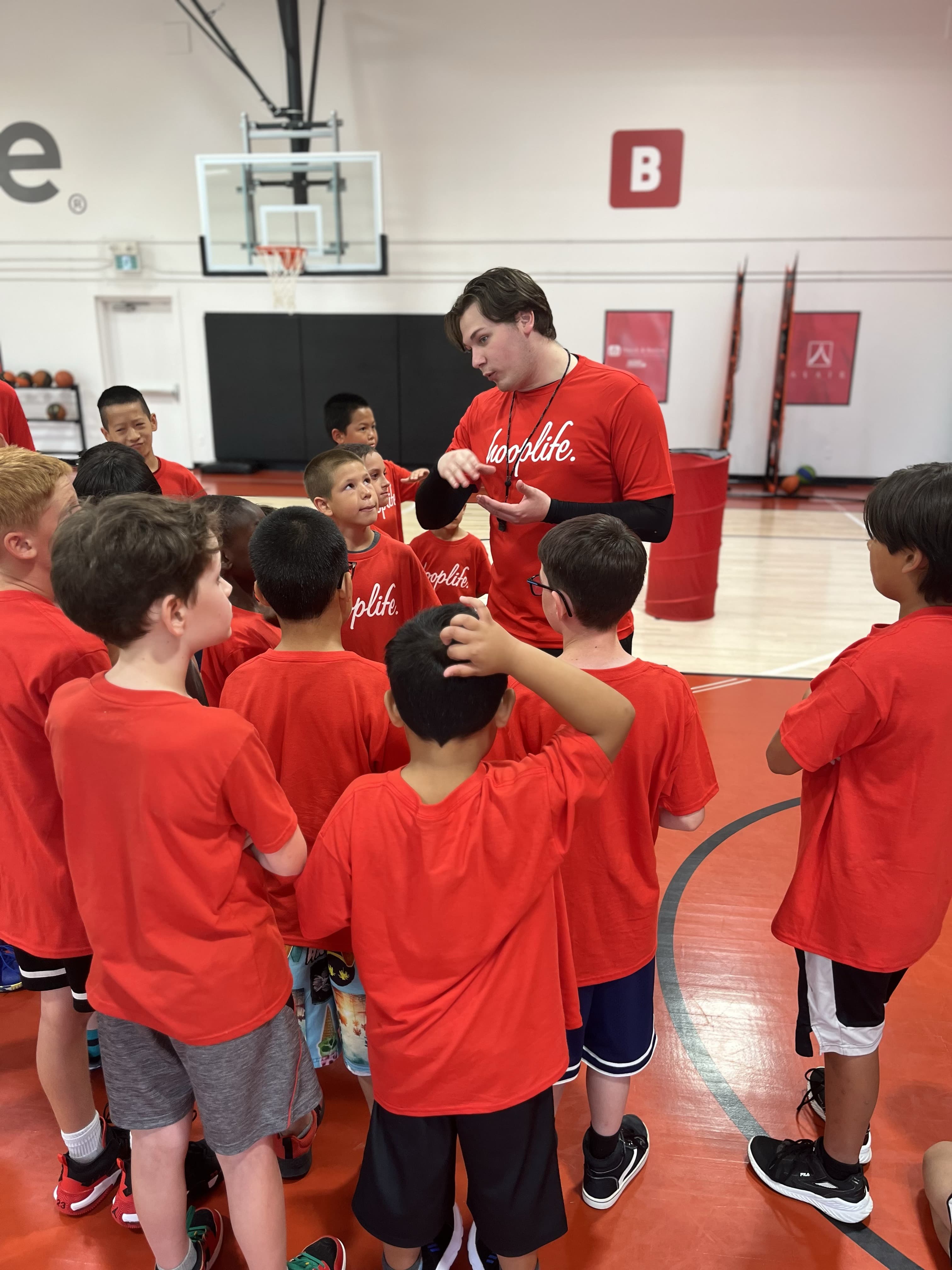
HoopLife is one of the options above: a training program and a league under one roof, in our own gym at 661 Solomon Cres. Ages 3 to 17, weekly sessions capped at 8 players per level, every week of the year, with the HoopLife League and school-break camps alongside. There is no tryout for the league; players are grouped by age and ability. Our own plain answers to most of the checklist are on one facts page.
We are not the answer for every family. If your child wants a selected club team with a travel schedule, look at a club program. If they want somewhere free to play, the outdoor courts and drop-in open gym will serve them well.
If you would like to try us, the $10 Get Started package is a 60-minute session, a quick meet and greet with the HoopLife Director coaching it, and two digital books. Here is what a first visit involves, so nothing is a surprise.
Frequently asked questions
What kinds of youth basketball programs are there in Regina?
Eight kinds: community and house leagues, school teams, club teams, training programs and academies, city and community-centre programs, camps, private coaches, and drop-in or outdoor courts. Each suits a different child.
How do I know which basketball program suits my child?
Work out whether they need more playing time, better skills, or harder competition. Those three needs point at different kinds of program, and many kids combine two.
What should I ask a basketball program before signing up?
How many kids per coach, who coaches and how they are trained, whether there is a tryout, how kids are grouped, where games are held, the full cost of the season, and whether your child can try a session first.
Is a league or a training program better for a beginner?
Either can work. A league gives a beginner games; a training program gives them coaching in a small group. A program that offers coaching inside the league week gives them both.
Does HoopLife have tryouts?
No. There is no tryout for the HoopLife League. Players are grouped by age and ability, and the head coach settles the teams during the program.
What if my child wants competitive club basketball?
Then a club program with tryouts and a travel schedule is the better fit, and we will tell you that rather than sign you up.
Want the details for your kid?
Leave your info and a real person from HoopLife will send the details and answer your questions. Spots are limited and they do go.