What Basketball IQ Actually Is, and How Kids Build It
Every parent has watched a kid who is not the fastest player on the floor quietly control the whole game. That is basketball IQ, and it is far more trainable than people think.

- Basketball IQ is reading the game and choosing well: when to cut, when to pass, when to shoot.
- It is built by decisions, not drills. The more real reads a kid makes per hour, the faster it grows.
- Small-sided games are the fastest builder: three a side means a read every few seconds.
- A shared vocabulary matters. A kid who knows what a closeout is can be coached in two words.
Watch any youth game and you will see it. One kid is faster and stronger, and another kid keeps ending up in the right place: open when the drive happens, back on defence before anyone else, making the pass one beat before the defender arrives. The second kid has basketball IQ, and by high school it beats raw athleticism far more often than parents expect.
The good news is that game sense is not a gift. It is a skill, and like any skill it grows with the right kind of reps.
What basketball IQ actually means
Strip the mystique away and basketball IQ is three habits:
- Seeing. Head up, reading where the ball, the defenders and the space are, instead of watching the dribble.
- Deciding. Choosing the right option quickly: cut or hold, pass or shoot, help or stay.
- Talking. Saying what they see, so five players act as one team instead of five individuals.
None of those show up in a solo shooting workout. All of them show up the moment there is a defender on the floor, which is exactly why they have to be trained on purpose.
Decisions per minute: the number that matters
A player builds game sense the way they build a jump shot: repetitions. But the repetition that counts is a decision made against a live defender, not a cone dribbled around. So the real question about any program is simple: how many real decisions does my kid make per hour of it?
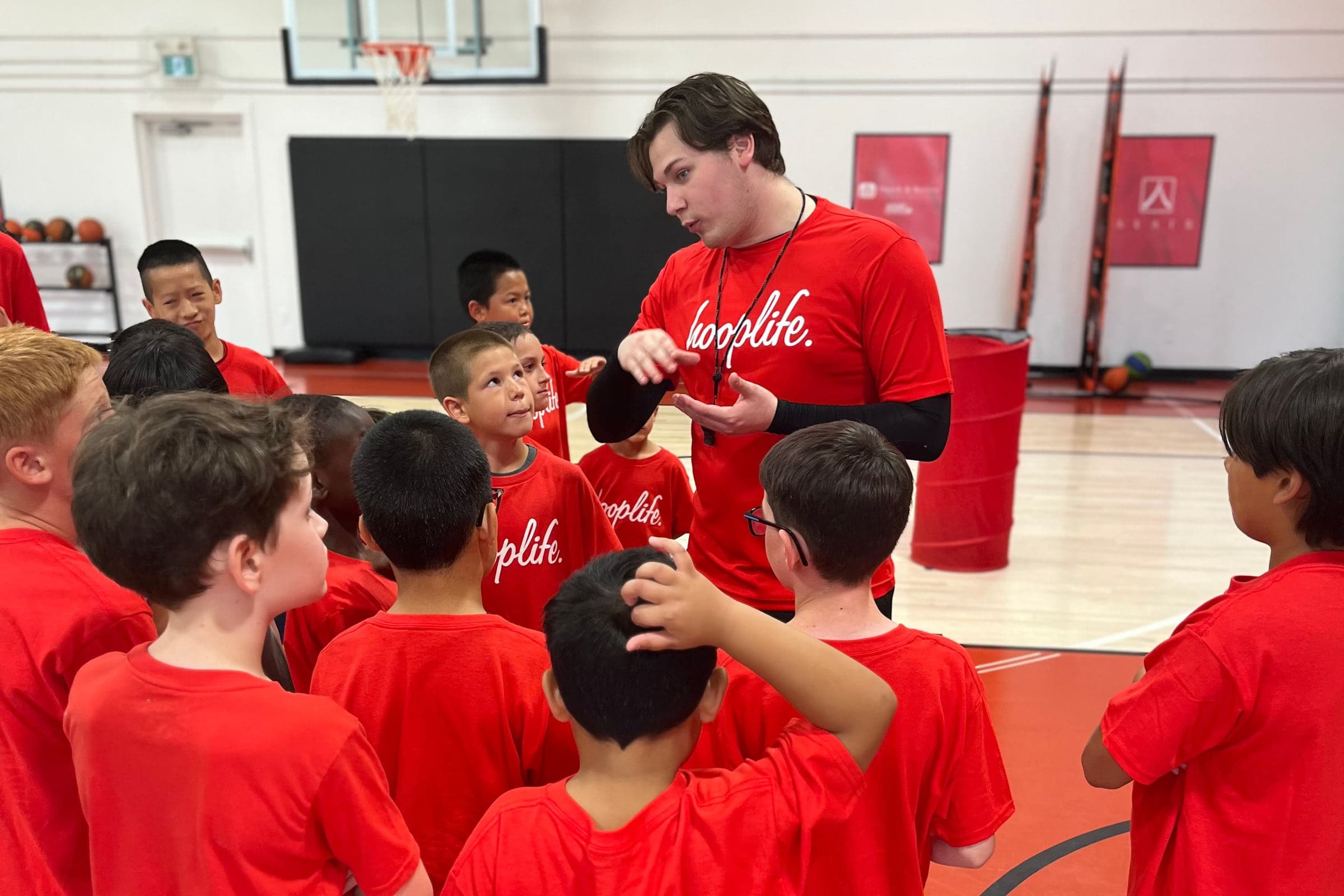
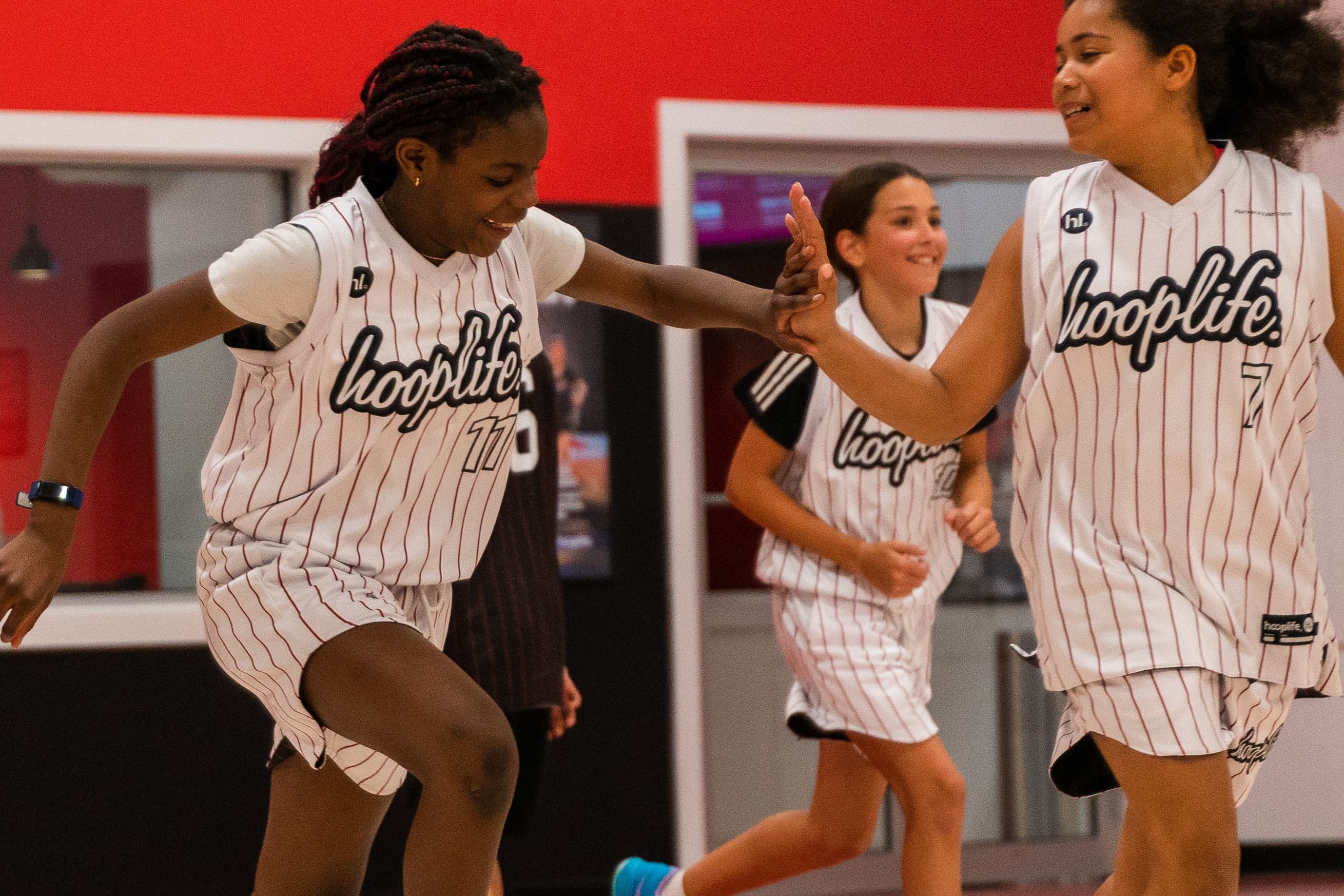
This is why we are so committed to small-sided basketball. In our 3x3 sessions, three a side means your kid is in every possession, with up to 60% more touches than a full five-on-five game, making a read every few seconds. There is nowhere to stand and watch, so the decision count per hour is enormous.
The part most programs skip: teaching the words
You cannot think clearly about things you have no words for. That is as true on a basketball court as anywhere else, and it is why every HoopLife coach teaches and uses one shared vocabulary: strong side and weak side, the back cut, the closeout, the down screen. When a nine-year-old knows what "weak side" means, a coach can fix their positioning with two words instead of stopping the game for a lecture, and the kid starts seeing the floor in those terms on their own.
That vocabulary is written down in our coaching library, and every coach on our floor is trained on the same one. It is a small thing that compounds all season.
How we coach it, week by week
Basketball IQ is one of the four training themes our written practice plans are built around, alongside off-ball movement, defence and communication, and shooting. In practice that looks like:
- Drills that always end in a read: the defender chooses, and your kid reacts.
- Live play in every single session, because a decision only counts when it costs something.
- Coaches asking questions in the breaks: what did you see, what was the other option?
Our weekly training sessions run this way every week of the year in groups of eight, and the HoopLife League adds the part nothing else can: real games, every week, with a coach in every break turning what just happened into a lesson.
What you will notice at home
Game sense shows up quietly. Your kid starts describing games differently in the car: not "I scored six" but "they kept helping off the corner so I kept passing there". They stop watching the ball and start watching the floor. They get calmer, because a player who knows what is about to happen has less to panic about.
That calm is the whole point. Confidence and basketball IQ are the same muscle viewed from different angles, and both are built one good decision at a time.
The position where basketball IQ shows up most is the one running the floor: what great point guards actually have is mostly this, made visible.
Frequently asked questions
Is basketball IQ something you can actually teach?
Yes. It grows with the number of real decisions a player makes against live defenders, plus coaching that names what they saw. Small-sided games and coached live play build it fastest.
What age can kids start building game sense?
Younger than most people think. Spacing and cutting are taught to grade 1 and 2 players in the HoopLife League, in a 3x3 format where every kid is involved in every possession.
My kid trains a lot but disappears in games. Why?
Usually because their training is unopposed: drills without defenders build skills without decisions. Add live, small-sided play, like our 3x3 sessions, and the training starts transferring.
Want the details for your kid?
Leave your info and a real person from HoopLife will send the details and answer your questions. Spots are limited and they do go.