5 Ways to Improve Your Ball Handling
Most players practise dribbling without practising the thing that actually makes a handle work. These five habits change that in a week.

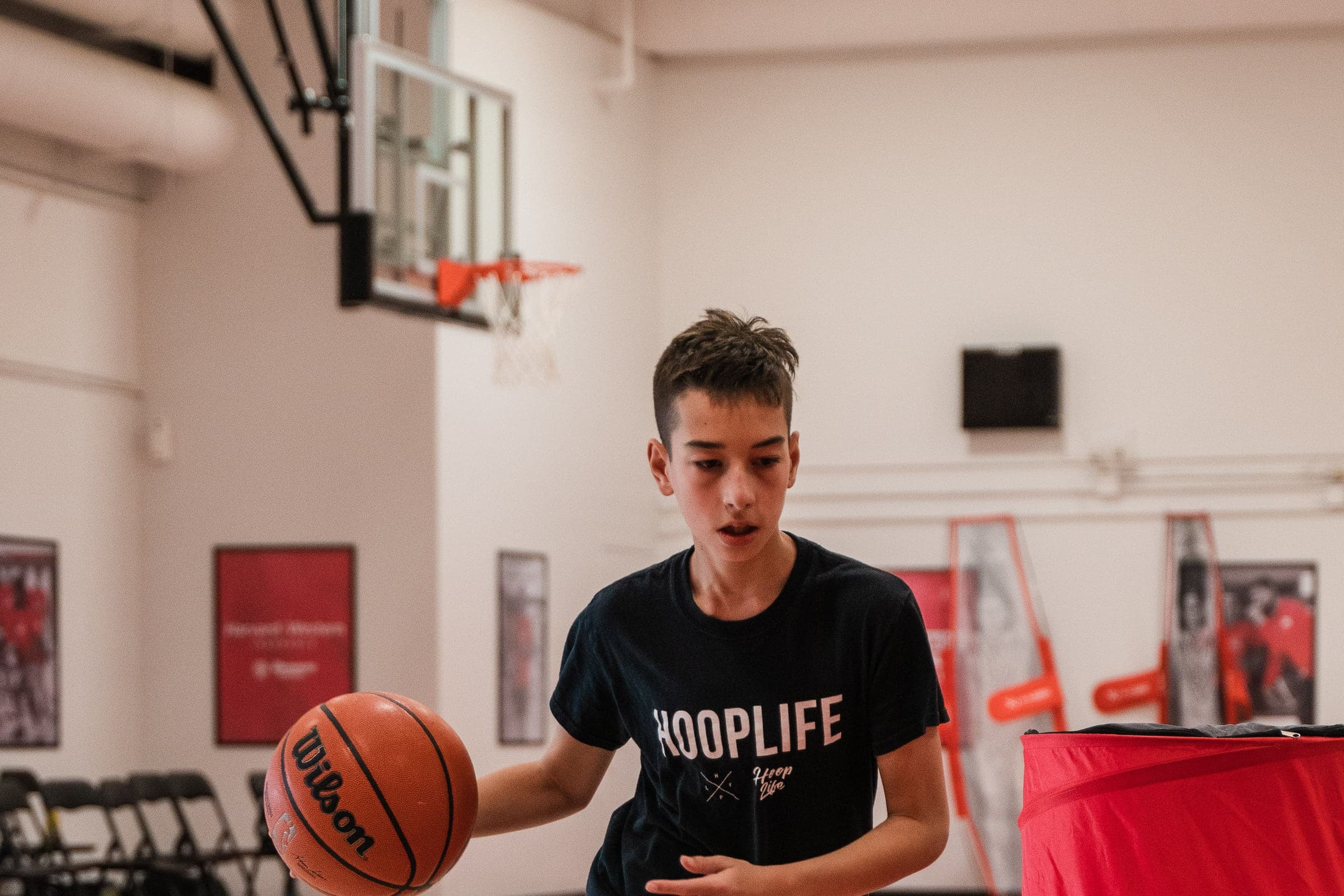
- Pound the ball. A soft dribble is a stolen dribble.
- Stay low. Knees bent, chest up, eyes off the ball.
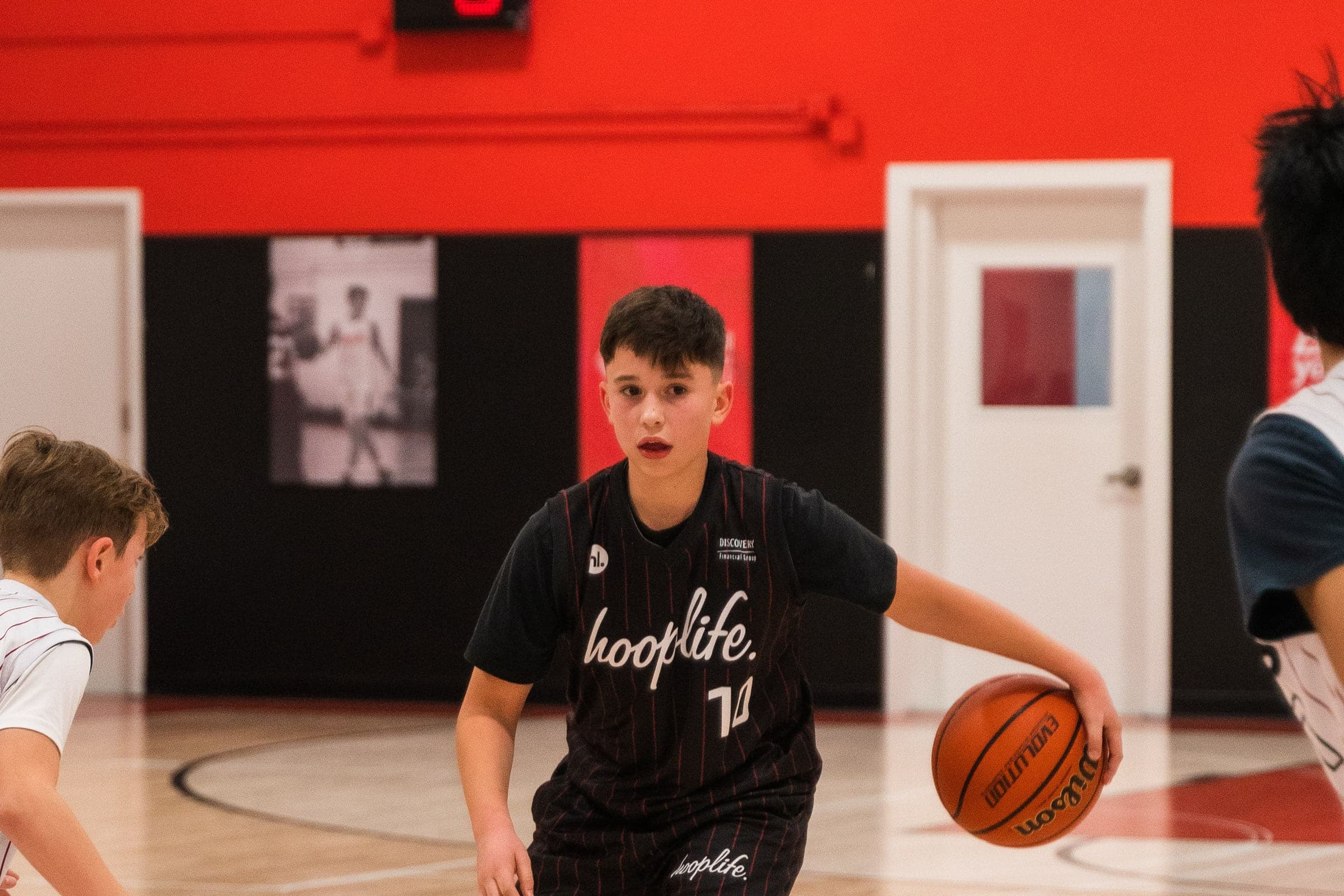
- Use your body as a shield instead of your arm as a barrier.
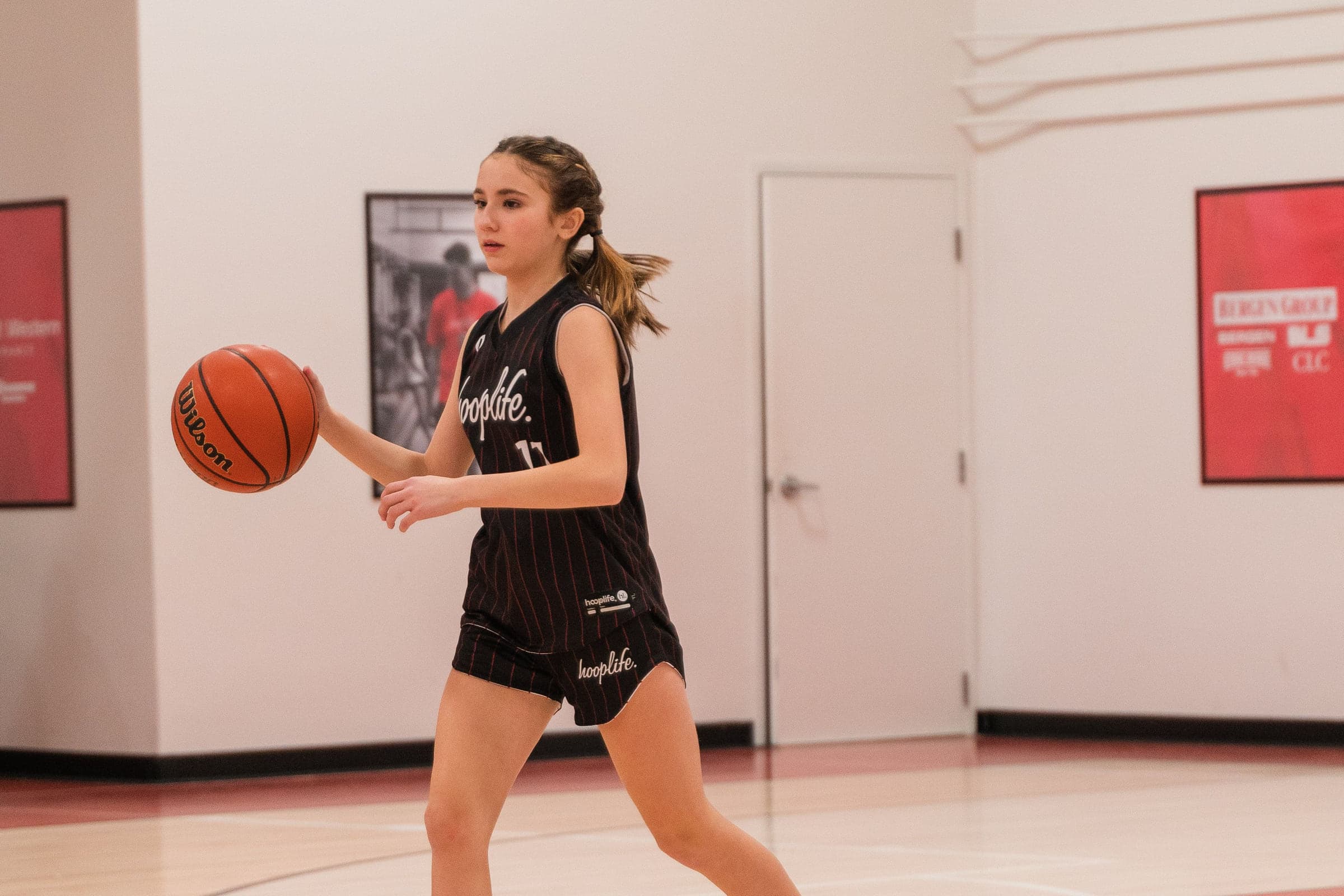
- Footwork moves the ball, not the wrist. Most handle problems are foot problems.
Ball handling is the skill kids practise most and improve at least. The reason is almost always the same: they run drills without knowing what the drill is for, so they get better at the drill and no better at basketball.
These are five things our coaches say on the floor every week at the HoopLife Centre. Keep them in mind and the same ten minutes of practice starts producing something.
1. Pound the ball
The harder the dribble, the faster it comes back to your hand, and the less time a defender has to reach it. Soft dribbling feels controlled and is the easiest ball in the gym to steal.
Practice is the one place where losing the ball costs nothing, so that is where to dribble harder than feels comfortable. Do it there and a game dribble feels effortless.
2. Stay low
Players get told to stay low for layups and rebounds and then stand straight up the moment they start dribbling. Low means knees bent, chest up, head up, ball below the knee.
Low gives you three things at once: a shorter distance for the ball to travel, more power to push off, and a body position a defender cannot reach through.
3. Shield with your body, not your arm
The best way to protect the ball is to put yourself between the defender and it. Turn the shoulder, keep the ball on the far hip, and keep moving forward. An off arm sticking out is a foul waiting to be called and it does less than a well-placed shoulder.
4. Fix the feet
Almost every "bad handle" we see in the gym is actually bad footwork. A crossover that goes nowhere is usually a crossover with no foot behind it.
Every change of direction should move your body, not just the ball. If your feet are still in the same place after the move, the defender has not moved either.
5. Practise the moves you will actually use
A player with two moves they can hit under pressure is far more dangerous than a player with eight they can only do alone in a driveway. Pick two, do them at game speed, against a defender, until they are automatic.
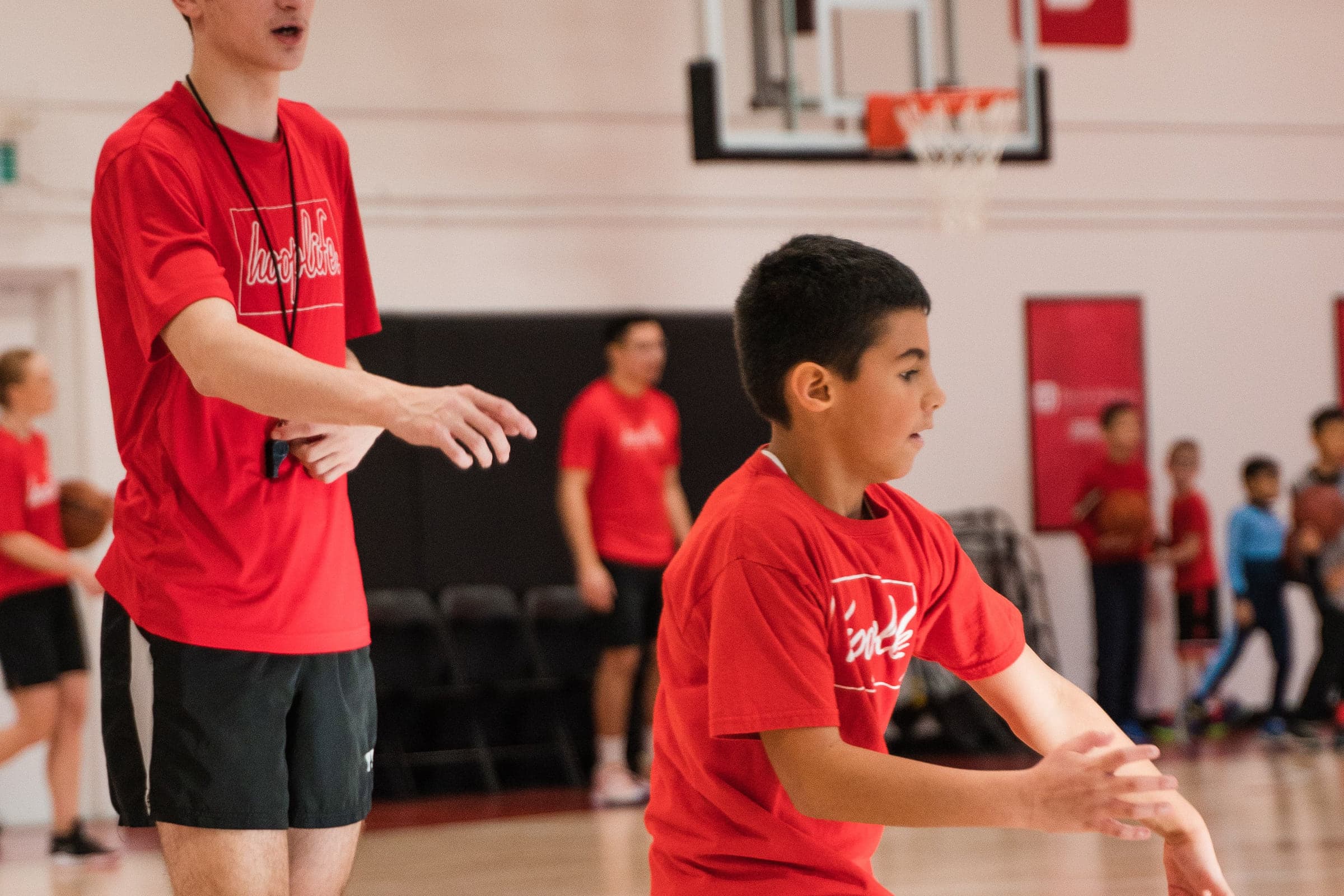
That last part is the hard bit at home, and it is why live play matters. Every one of our weekly training sessions finishes with live play, and our 3x3 sessions are almost entirely live play — three a side means up to 60% more touches than a full game, so the moves get tested constantly.
Ten minutes a day beats an hour on Sunday
Handles respond to frequency more than volume. Ten minutes of pound dribbles, crossovers and figure eights, most days, will do more over a winter than a long session once a week. We wrote out the full list of drills that need no hoop: basketball drills kids can do at home.
And if you want the habits corrected as they are being built, that is what a coached hour is for. Groups of eight, every week of the year, in three age bands.
Frequently asked questions
How can a kid improve their ball handling fast?
Ten minutes a day of hard, low dribbling with eyes up, then live play once a week so the handle gets tested under pressure. Frequency matters more than long sessions.
Why does my child lose the ball in games but not in practice?
Usually because practice dribbling is soft, upright and unopposed. Pounding the ball low, with a defender in front of them, is what makes practice transfer.
Where can my child get coached on ball handling in Regina?
Skills Training sessions run every week of the year at the HoopLife Centre, in groups of eight, for ages 7-17.
Want the details for your kid?
Leave your info and a real person from HoopLife will send the details and answer your questions. Spots are limited and they do go.